
Creating a Church Safety and Security Policy Manual can be a very intimidating and arduous task (Ask me how I know???). Don’t recreate the wheel, let me help! Church Safety and Security Programs and Policy Manuals are an insurance industry best practice because they mitigate risk and liability.
Why Every Church Needs a Safety and Security Policy Manual
A well-crafted Church Safety and Security Policy Manual is more than just a binder on a shelf — it’s a foundational tool that helps shape a church’s culture of preparedness, care, and responsibility. By clearly outlining expectations, responsibilities, and procedures, the policy manual helps instill safety-minded behaviors across every ministry, function, and area of church life.
In this post, I’ll walk through:
- What a Church Safety and Security Policy Manual is
- What essential components it should include
- Why having one in place is critically important for every church and congregation
As believers, we are called to be both faithful and wise stewards — and part of that stewardship includes protecting the people God entrusts to our care. A solid safety and security policy manual equips your church to do just that.
Church Safety and Security Policy Manual
A Church Safety and Security Policy Manual serves as a comprehensive guide for establishing and maintaining a safe environment for all who work, worship and fellowship within the church community. In addition to operational procedures, the policy manual will include guidelines for emergency response, such as responding to medical emergencies, violence, and shelter in place or lockdown protocols. The manual will also cover security measures, such as access control, physical security, cyber security, and training for staff and volunteers.
A church safety and security policy manual will also address legal, and liability issues, as well as protocols for handling specific threat hazards like child custody or restraining order violations up to and including natural disasters like earthquakes, tornadoes, and wildfires.
Safety & Security Policy Manual Format
Depending on the size of the church and the number of ministries, programs and services offered, the manual should contain the following five (5) primary policy sections:
- Operations Policy is a reference to the “Functional Operations” of the church and would include finance, information technology, human resources, and operations. There are many safety and security operations policies (Access Controls, Alarm Procedures, Financial Controls, Hiring Process, Background Checks, etc.) that work to safeguard the business side of church operations.
- Children’s Ministry Policy The safety and well-being of children participating in church programs should be the highest priority of every church. Children’s programs present significant liability concerns for churches, including issues such as missing children, custody disputes, injuries, and even child abuse or molestation. To address these risks, churches must implement comprehensive policies and procedures to ensure the safety and security of every child involved in their programs.
- Safety and Security Policy The Safety & Security section of the policy manual contains Emergency Preparedness Policies. These policies and procedures are designed to help create a church culture of Safety & Security through training and preparation. Emergency Preparedness policies and protocols include Missing/Lost Child, Emergency Evacuation, Shelter in Place, Lockdown, and many more.
- Church Safety Team Policy For churches that have a Safety Team, the safety team policies and procedures are comprehensive and would be placed in this section. Types of policies would include Team Composition, Selection Process, Communications, Training, Firearms Policy, Use of Force, Responsibilities, just to name a few.
- Emergency Operations Plan (EOP) The final part of the Church Safety & Security Policy Manual is the Emergency Operations Plan (EOP). This plan serves as a detailed guide for responding to various emergencies that may occur on the church premises. It is designed to be adaptable and can be adjusted according to the specific emergency situation. The EOP covers a wide range of emergencies, from natural disasters like earthquakes and floods to man-made threats like violent intruders or active shooters.
The EOP is critical for effective emergency response. It outlines the roles and responsibilities of leaders, staff, and volunteer responders, emphasizing the importance of being well-trained and prepared. A successful emergency response depends on leaders who are trained and competent, staff who are dedicated and motivated, and volunteer responders who have the necessary knowledge and training in emergency preparedness.
Due diligence responsibility
In the world of risk management, the term “due diligence” refers to the requisite effort taken to prevent harm — a concept that dates back to the 15th century. Today, it carries legal weight and is closely tied to the principle of “duty of care” — the obligation to act with reasonable care to protect others from foreseeable harm.

churches Have a Legal Duty of Care to Protect Congregants
Under premises-liability law, places of worship — like all property owners — owe a duty of reasonable care to all lawful visitors. Churches are expected to take proactive steps to safeguard attendees from both physical hazards and foreseeable criminal acts on their property.
Legal Foundation of Duty of Care
Faith-based organizations are held to the same legal standards as other property owners. Three key concepts define how this duty applies:
1. Invitee Status
An invitee is someone lawfully on the premises for the benefit of the property owner or for public purposes — such as attending worship services or church-sponsored events.
Churches generally treat congregants and guests as invitees, which means they owe them the highest level of care under the law. This includes protecting them from environmental dangers and potential criminal acts.
Legal principle: Landowners must anticipate and guard against foreseeable risks that could harm invitees.
2. Ordinary Care
Ordinary care is the degree of caution a reasonably prudent person would use under similar circumstances. For churches, this includes:
- Conducting regular inspections of entrances, parking lots, and gathering areas
- Repairing or warning about known hazards (wet floors, broken locks, obstructed exits)
- Training staff and volunteers in emergency procedures and basic safety awareness
3. Foreseeability
A risk is considered foreseeable when a reasonable organization, given the information available (e.g., prior incidents, crime statistics, or credible threats), should anticipate potential harm.
Churches have a legal obligation to act when:
- There is a pattern of similar crimes in the area
- Threats have been made against the church or faith community
- There have been prior safety or security incidents at the facility
Failing to act on foreseeable threats — even if the exact method or timing is unknown — may constitute negligence.
By formally recognizing invitee status, applying ordinary-care standards, and responding to foreseeable risks, churches satisfy their legal duty of care and better safeguard congregants.

Churches generally invite congregants onto their property as invitees, who are owed the highest duty of care. To meet this obligation, a church must:
- Regularly inspect grounds and facilities for hazards
- Correct dangerous conditions in a reasonable time
- Warn attendees of known risks not readily apparent
Liability often hinges on whether harm was foreseeable, based on prior incidents, local crime rates, or published threats.
Meeting The Standard of Due Diligence
To meet their duty of care, churches must:
- Regularly inspect the property for safety and security risks
- Address and correct hazardous conditions promptly
- Provide warnings about known dangers that may not be immediately obvious
In legal proceedings, liability often depends on whether harm was foreseeable — based on prior incidents, crime trends, or credible threats.
Due Diligence in Action: Why a Safety Program Matters
All organizations — including churches — are expected to show that they made a reasonable and documented effort to prevent harm. A Church Safety and Security Program or Policy Manual demonstrates due diligence and is widely considered a best practice within the church insurance industry.
If someone is injured on church property and there is no documented safety plan or training program in place, a legal argument may be made that the church failed to make any reasonable effort to prevent the harm — and thus acted negligently.
Bottom line: Due diligence isn’t just a legal requirement — it’s a reflection of faithful stewardship. When churches proactively plan, train, and prepare for safety and security, they honor both their legal obligations and their sacred calling to protect the flock (Acts 20:28).

FAQ
It is prudent to review a policy manual every 1-2 years. Most often a church safety committee is tasked with this responsibility to ensure that policies remain current, updated and effective in maintaining a safe and secure environment.
There is not a legal mandate, but it is prudent for churches to conduct this type of training annually. If an Active Threat or other act of violence occurs during normal operations, and the church failed to train the congregation how to respond (Lockdown, Evacuate, etc.) to this type of known threat hazard, the church can be held responsible civilly if someone is harmed. The church has a “duty of care” responsibility to train their staff and membership on recognized threat hazards including Active Shooter, Fire and Severe Weather.
Policies are communicated in a variety of ways depending on the size of the church. Policy sections are included with onboarding materials for new staff and volunteers; policy is communicated during regular training sessions within specialized programs and groups; many churches utilize digital platforms such as email newsletters, websites, and intranet portals to distribute policy updates or newly implemented guidelines; during worship meetings or services, church leadership may discuss key policies relevant to the safety and security of the church community.
RELATED CONTENT
- Active Shooter Response Protocols
- What is Church Safety & Security
- Are Church Safety & Security Programs Necessary
summary
Creating a Church Safety and Security Policy Manual does not have to be difficult or time consuming. Understanding the purpose of the policy manual and the specific policy sections to be included allows you to focus your time, energy and resources on what is important. When completed, the policies and procedures work to safeguard church staff, members, and guests, while indemnifying the church.
RESOURCE PUBLICATION
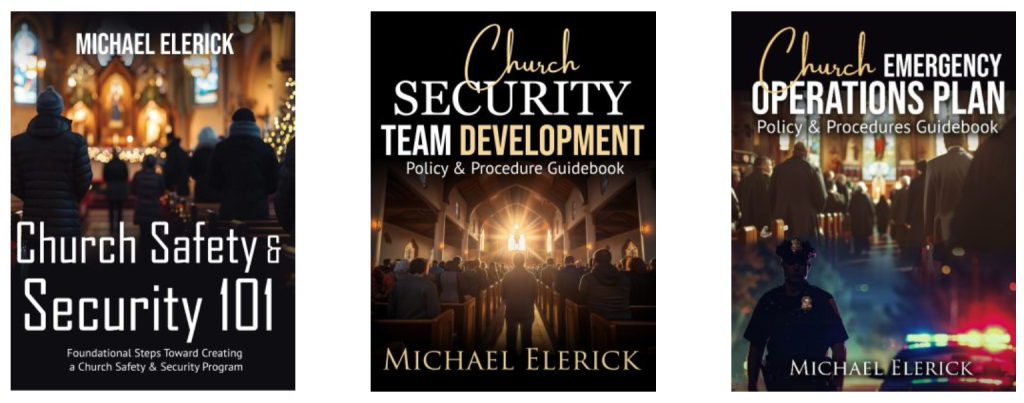
Public Safety Training LLC is here to serve and has established training and consulting programs and publication resources available to help. We would be honored to assist your church in any way we can. Contact us today!
Michael Elerick is the President of Public Safety Training LLC and founder of Church Security-101. A retired law enforcement professional, he retired as a Special Operations Commander and SWAT Commander. From 2010 to 2020, Michael was the Executive Director of the Public Safety Training Institute, a nonprofit public safety training organization. With over 30 years of experience as a Risk Manager and expert in security and tactical operations, he brings deep insight into protecting faith-based communities.
He is the author of Church Safety & Security 101, Emergency Preparedness for Church Volunteers, Church Security Team Development, Church Emergency Operations Plan (EOP), among other works.


