Church Safety Collaboration: How Churches Can Build Stronger Safety & Security Programs Together

Church Safety Collaboration is a practical and proven approach for churches facing increasing safety and security challenges while operating with limited staff, volunteers, and budgets. By working together through regional partnerships such as Church Security Coalitions, churches can strengthen safety teams, develop effective policies, improve emergency action planning, and share training.
A Church Security Coalition is a collaborative partnership of multiple churches within a shared region. These coalitions work together to intentionally strengthen church safety teams, develop sound policies, improve emergency action planning, and coordinate shared training. A Church Security Coalition is a Fellowship for safety team leaders and leadership.
Rather than each church attempting to solve the same problems alone, coalitions allow churches to learn, plan, and prepare together, strengthening their collective ability to protect the people God has entrusted to their care.
WHAT IS A CHURCH SECURITY COALITION?
A Church Security Coalition brings together:
- Church safety and security volunteers
- Ministry and church leaders
- Security professionals
- Local law enforcement partners
The purpose of a coalition is to address common safety and security challenges, share best practices, and build sustainable, ministry-appropriate safety programs. Church Security Coalitions help churches move from reactive safety and security measures to intentional, well-planned preparedness.
DEVELOPING STRONGER CHURCH SAFETY TEAMS
One of the greatest benefits of a Church Security Coalition is the ability to collectively develop and support church safety teams.
Through collaboration and shared training, churches can:
- Establish clear roles and expectations for safety team members
- Learn effective approaches to team selection, screening, and oversight
- Promote consistent training standards and professionalism
- Build teams rooted in calmness, compassion, and readiness
- Share training resources within a region
This shared approach helps churches avoid common mistakes and reinforces that church safety teams exist to serve quietly and faithfully.
SHARED SECURITY POLICIES & GOVERNANCE
Many churches struggle with where to begin when developing church safety and security policies. A Church Security Coalition provides a trusted environment where churches can work together to develop and share legally informed, ministry-appropriate policies.
Common policy focus areas include:
- Incident reporting and documentation
- Safety Team Operations
- Access Control
- Children’s & Youth Ministry Protection
- Coordination with local law enforcement
- Ethical decision-making aligned with ministry values
- Use-of-force considerations and clear boundaries
Each church maintains its own authority and governance, but shared policy development improves clarity, accountability, and confidence for leadership and volunteers alike.
COLLABORATIVE EMERGENCY ACTION PLANNING (EAP)
Emergency Action Plans are most effective when they are realistic, well understood, and discussed regularly. Church Security Coalitions help churches move beyond generic templates by developing practical, ministry-focused emergency response plans together.
Coalition planning often addresses:
- Medical Emergency Response Protocols
- Church Violence and Active Threat Response Protocols
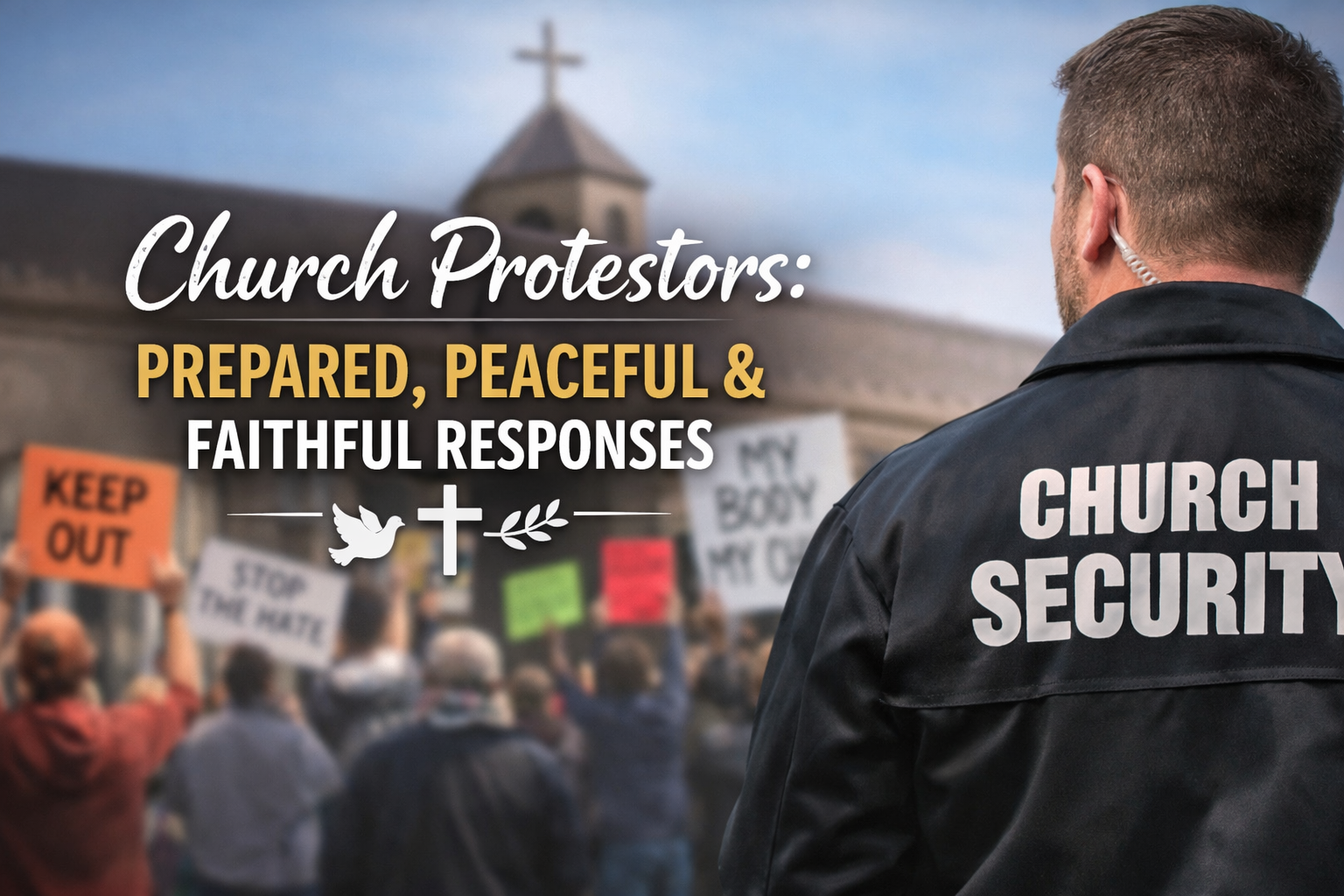
- Disruptive Person(s), Groups, Protester(s) Response Protocols
- Fire, Evacuation, Lockdown, and Shelter-in-Place Protocols
- Severe Weather and Disaster Response
- Communication and Command During Emergencies
By learning from regional risks and shared experiences, churches are better prepared to respond wisely when seconds matter.
SHARED CHURCH SAFETY & SECURITY TRAINING

Church Security Coalitions create valuable opportunities for shared training that strengthens the entire faith community. Joint training reduces costs, increases participation, and improves consistency across safety teams.
Shared training allows churches to:
- Share subject matter expert trainers within a region
- Practice realistic scenarios in a controlled environment
- Train alongside neighboring churches and first responders
- Reinforce common terminology and best practices
- Build trust and familiarity before an emergency occurs
- Reduces training costs through regional participation
When churches train together, they respond more effectively – not just individually, but as a coordinated community.
BENEFITS OF JOINING A CHURCH SECURITY COALITION
Churches that participate in a Church Security Coalition benefit in multiple ways:
- Free or low-cost participation through volunteer-driven collaboration
- Access to subject matter experts and experienced practitioners
- Shared resources, including policies, procedures, equipment, and insight
- Regular meetings and networking (Fellowship) with neighboring churches
- Legal and liability awareness through professional presentations
- Improved preparedness through shared planning and information
- Enhanced training opportunities without overburdening any single church
These advantages help churches strengthen safety while managing costs responsibly.
HOW COALITIONS HELP MANAGE CHURCH SECURITY BUDGETS
Most Church Security Coalitions operate with no membership fees. Training costs are shared when outside instructors are needed, significantly reducing expenses. Meeting locations, facilitation, and administrative duties are typically rotated among member churches.
THE ROLE OF EACH MEMBER CHURCH
Coalitions succeed when churches actively participate. Member churches contribute ideas, share lessons learned, identify regional needs, and take part in joint training and planning.
By engaging consistently, churches strengthen both their own safety programs and the resilience of the entire coalition.
HOW TO START A CHURCH SECURITY COALITION
If no coalition exists in your area, starting one is achievable with the right approach – DOWNLOAD our FREE How to Start a Church Security Coalition Guidebook (Scroll Up).
Key steps include:
- Leadership approval from your church
- Identifying interest among neighboring churches
- Optional law enforcement partnership for training and threat awareness
- Hosting an initial meeting focused on shared goals and collaboration
Coalitions grow best when they start simple, remain mission-focused, and prioritize trust.
A MODEL OF WISE STEWARDSHIP
Church Security Coalitions are not driven by fear. They are built on wise stewardship, collaboration, and faithful preparation.
By working together to develop church safety teams, security policies, emergency action plans, and shared training, churches create safer environments where worship can remain open, welcoming, and centered on Christ.
“Plans succeed with good counsel.” – Proverbs 20:18
FAQ
No. Each church maintains full authority over its own leadership, policies, and security decisions. A Church Security Coalition is a collaborative partnership, not a governing body. The coalition exists to share best practices, training opportunities, and resources while allowing each church to adopt what best fits its ministry culture, leadership structure, and legal requirements.
Not at all. Church Security Coalitions are especially valuable for small and mid-sized churches that rely on volunteers and have limited budgets. Coalitions provide access to shared training, policies, and experienced insight that individual churches may not be able to develop on their own. Churches at every stage of safety ministry development can benefit.
Church Security Coalitions help churches collaboratively develop and improve Emergency Action Plans (EAPs), conduct shared training, and learn from real-world experiences within their region. By planning and training together, churches are better prepared to respond to medical emergencies, disruptive individuals, severe weather, and active threats in a coordinated, calm, and effective manner.
related content
PUBLICATION RESOURCES

OUR COMMITMENT TO YOU
Our church safety & security blog, newsletter, and FREE Resource Library, is provided at no cost to strengthen and support church safety programs. This work is made possible by those who support us through the purchase of our guidebooks and faith-based policy templates. We invite you to explore our publications on AMAZON or in our ONLINE STORE. Your support helps us continue serving those who serve His Church.
Public Safety Training LLC would be honored to assist your church and safety team in any way we can. Contact us today!
AUTHOR
Michael Elerick is the President of Public Safety Training LLC. A career law enforcement professional, he retired as a Special Operations Commander with more than 30 years of experience in risk management, tactical operations, and security. From 2010 to 2020, Michael served as Executive Director of the Public Safety Training Institute.
Since 2010, Michael has trained and consulted with faith-based organizations across the country. He is the author of Church Safety & Security 101, Emergency Preparedness for Church Volunteers, Church Safety Team Development, Church Emergency Operations Plan (EOP), and other works focused on equipping ministries to protect the body of Christ.
Please Share this information – Spread the Love!