Some eight million people visit hospital emergency rooms each year due to slip and fall hazards and accidents, per the National Flooring Safety Institute. Slip and fall accidents make up 12% of total falls and independently accounts for over one million emergency room visits. As many of us can attest, some of these slip and fall accidents occurred on church properties.
In this post we will discuss everything churches need to know about slip and fall hazards and accidents. This includes what a slip and fall accident is, what the top slip and fall hazards are for churches, and how we can prevent these types of risks from occurring. We will also look at slip and falls from a lawyer’s perspective and talk about how they prove negligence in slip and fall cases.

What is a Slip and Fall Hazard
Slip and fall hazards cause accidents when somebody loses their balance and falls due to a condition like a slippery surface or an uneven surface. The severity of injuries from these falls can vary widely, from small scrapes and bruises to serious injuries including broken bones, head, and neck injuries, and even death. A persons age and physical condition can also influence these types of accidents.
Primary Slip and Fall hazards for Churches
The most common slip and fall hazards for churches are wet surfaces. Having flooring surfaces that provide the necessary traction for the congregation and visitors is vital in reducing these hazards from occurring. Churches can help prevent slip and fall accidents by maintaining their property in a clean and hazard free state.
Entrances are a primary focal point during wet inclement weather (rain, snow, ice) as these areas can become slippery and cause slip hazards to occur. Laying down slip-resistant mats and having designated people inspect the areas periodically during services is recommended. If a hazard starts to develop, they can take actions like mopping the floor, towel drying the flooring, or replacing a wet mat, to avoid accidents from occurring.
Kitchens are another area prone to spills, making it important to promptly clean up any liquid spills to prevent slip and fall hazards. Using rubber nonslip mats will help minimize this risk further. Stairs pose common fall hazards, so it’s important to ensure they are well-lit, clear of obstacles, and equipped with sturdy handrails.

Elevated seams in both cement and flooring materials often lead to slip and trip accidents in churches. It’s important for churches to clearly mark these hazards when identified to prevent falls and then take steps to fix these issues as soon as possible.
Preventing Slip and Fall Hazards and accidents
A sound church safety and security program will have related slip and fall policy and procedures in place to mitigate these types of hazards from occurring. Policy issues may include:
- Routine Property Inspections: Our church is committed to maintaining a safe, clean, and hazard-free environment for all who enter our premises. To achieve this goal, regular workplace inspections are conducted quarterly. The primary purpose of these inspections is to identify and address potential safety and health hazards, including those related to slip and fall incidents (Download Free Checklist below).
- Establish Housekeeping Standards: Church maintenance staff and volunteers should prioritize housekeeping, ensuring that walkways are clear of potential hazards such as electric cords or hoses. Additionally, any spill areas should be promptly secured until the spill can be cleaned up. Placing “Wet Floot” signs and safety pylons warning of the spill is expected whenever this equipment is available.
- Sound equipment & Staging: Sound equipment and staging wires and cords should be neat, clean, and away from walkways. If wires and/or cords need to run across flooring to the stage, Gaff tape should be used to secure these items to the ground to prevent slip and fall accidents.
- Training on Safety Procedures: Train church staff and volunteers on safety procedures to prevent slip and fall accidents from occurring. Training should include the recognition of hazards, reporting requirements, maintenance, work practices and equipment that can improve safety.
- Invest in Seasonal Safety Measures: As the seasons change so do Slip, Trip and Fall hazards. Church leaders should prepare ahead of time to keep staff and members safe. Measures may include extra slip resistant mats, Wet Floor Safety Signs and Pylons; mops/buckets, heavy duty drying towels, floor squeegee, high volume air dryers.
- Corrective Maintenance: Corrective maintenance is a process used to fix or repair a hazard. This type of maintenance should be performed as soon as possible after a hazard is identified and reported to prevent injuries from happening.
What Happens if a Slip and Fall Accident Occurs?
Once notified, the church will respond and ensure the person involved is cared for and medical treatment is provided if needed. Depending on the circumstances and injuries involved notifications would be made to 9-1-1, if not already called, and family. The next step is to investigate the incident.
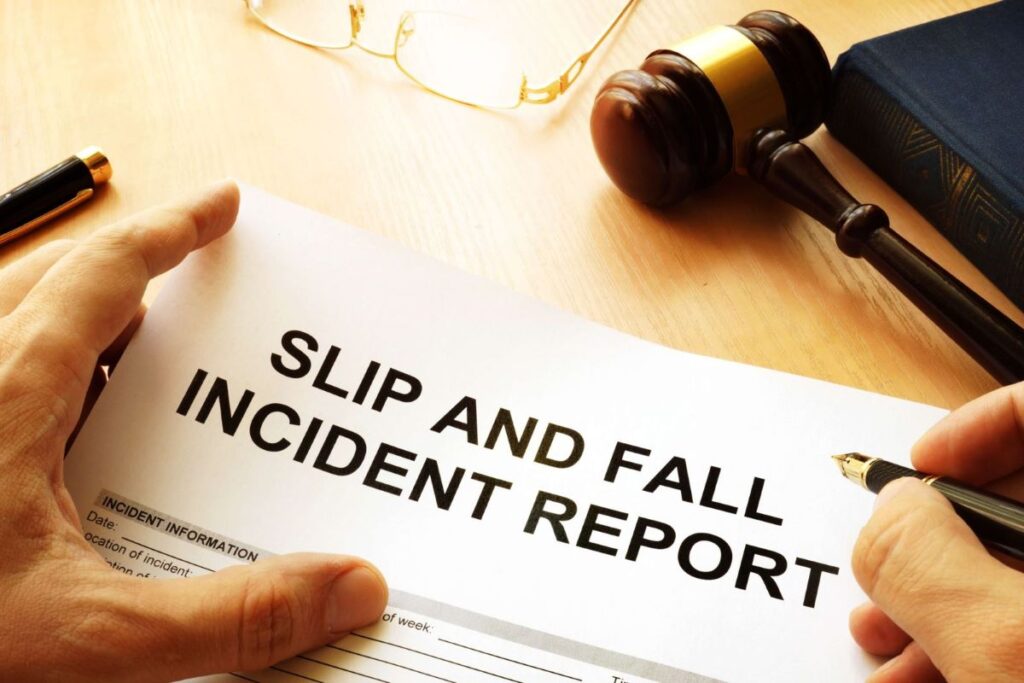
Church security should investigate any accidents immediately and complete a Church Incident Report. An accident investigation involves taking photos, interviewing witnesses, gathering, and analyzing information in order to identify the cause of the accident. Once the cause is identified, recommendations can be made to take corrective actions to prevent similar accidents in the future.
It is vital that churches document all maintenance and repairs related to these types of hazards (dates, times, locations), and the results achieved, in a maintenance log. Should a slip and fall injury occur in the future, these records will help mitigate claims of negligence because it shows an ongoing effort to provide a safe environment for all who enter the church premises.
How Lawyers View Slip and Fall Accidents to Prove Negligence
In order for a lawyer to win a slip and fall lawsuit, they need to demonstrate that the church (Property Owner/Occupier) failed to fulfill their duty of care. The lawyer must prove that the church’s irresponsible behavior created conditions that directly led to the persons fall and subsequent injuries.
All property owners and occupiers (Renter/Leasee) have a duty to maintain their premises. If they know of a hazard, or should be aware of one, and they do not fix it and/or provide appropriate warning, the property owner can be held responsible for resulting falls.
Components of Negligence
In order to win the case, the lawyer will have to prove the church was negligent in order to win compensation for a slip and fall lawsuit. Below are the specific components of negligence a lawyer must demonstrate including:
- The church caused the hazardous condition, had knowledge of it, or should have known of it if they exercised the level of care a reasonable person would have exhibited.
- The church failed to correct the condition if there was a reasonable opportunity to do so and/or failed to warn of the hazard.
- The churches failure was the direct cause of injury.
- The injury caused harm.

Lawyer Examples of Conditions Leading to Slip and Fall Cases
Many types of hazardous conditions can result in a slip and fall including the following:
- Wet floors
- Uneven flooring
- Loose flooring material
- Bulging carpeting
- Unsalted icy areas
- Potholes
- Spill that aren’t cleaned up
- Debris or trash on the floor
- Cords in walkways
- Poor lighting
Property owners or occupiers should correct or warn of the dangers when these conditions develop. For example, if an employee of a store washes a floor, they should put up a “Wet Floor” sign to warn patrons.
Legal Factors That Can Impact a Negligence Case
- Personal Responsibility for the Accident: In some cases, the injured party may share some responsibility for the fall. For example, if they walked around a wet floor sign, they made a decision that increased their chances of a fall occurring. Whether their role affects their ability to file a slip and fall lawsuit or not depends on the specific circumstances, as well as the rules where they live (State).
- Contributory Negligence: In a small minority of states, contributory negligence rules apply. This means that if you play even a tiny part in causing your own injuries, you will not be able to recover compensation for your slip and fall.
- Comparative Negligence: In most parts of the United States, contributory negligence rules have been replaced by comparative negligence rules. If you live in a state with comparative negligence rules, you can potentially still pursue a claim even if you are partly to blame for your fall. However, you will receive less compensation.
The above legal information appeared in the Forbes Advisor Blog in an article titled: Slip And Fall Lawsuit Guide 2024 by Christy Bieber, J.D.
lEGAL sTANDING
Understanding the legal complexity surrounding slip and fall negligence lawsuits allows churches to proactively manage risks while maintaining their commitment to providing a safe environment for church staff, members, and visitors alike. This understanding enables churches to implement solid risk management strategies aimed at reducing slip and fall accidents from occurring and minimizing potential liabilities. Strategies may include enhancements to policy, procedure and safety protocols, routine inspections, and immediate mitigation of hazards when identified or reported.
See Something – Say Something – Do Something! If you see a hazard, you should notify the church office right away. If you have to leave the area to do this, try to make the area as safe as possible so that others will not be harmed by the hazard. If the hazard is something that you can and are willing to clean up, like a liquid spill on laminate flooring, then please do so and then report it to the church office.
Yes, we all have a shared responsibility with the church. As a member or visitor, we have a certain level of responsibility for our own safety. While the church also has a responsibility to maintain a reasonably safe environment, visitors are generally expected to exercise reasonable care and caution to avoid hazards. This includes being aware of our surroundings and watching out for common hazards like wet floors or loose carpeting.
It is important that churches have a policy and procedure in place to respond to any reported hazard, because a quick response is how we prevent accidents from occurring. From an attorney’s perspective, if a policy is in place and the church is aware (trained) of the policy, liability for any related accidents is mitigated because the church is making an effort at prevention.
Summary
Slip and fall hazards and accidents in churches are a reality that has the potential of injuring and causing harm to staff, members, and visitors alike. It’s the responsibility of churches to ensure a safe environment for everyone stepping onto their property. Through the implementation of a church safety and security program, churches can actively reduce these risks by establishing clear policies, procedures, and training initiatives.
This includes implementing measures to prevent slip and fall hazards such as keeping walkways clear, promptly cleaning up spills, maintaining proper lighting, and ensuring that flooring surfaces are in good condition. By taking proactive steps to address potential hazards and promoting safety awareness among congregants and visitors, churches can help minimize the risk of slip and fall accidents and create a welcoming, warm, and secure environment for all.
Related Content
- Church Security Volunteers
- What is Church Safety & Security
- Why Do Churches Conduct Risk Assessments
Our Commitment To You
Our church safety & security blog, newsletter, and FREE Resource Library, is provided at no cost to strengthen and support church safety programs. This work is made possible by those who support us through the purchase of our guidebooks and faith-based policy templates. We invite you to explore our publications on AMAZON or in our ONLINE STORE. Your support helps us continue serving those who serve His Church.
Public Safety Training LLC would be honored to assist your church and safety team in any way we can. Contact us today!
aUTHOR
Michael Elerick is the President of Public Safety Training LLC and a retired Special Operations Commander and SWAT Commander. A career law enforcement professional with over 30 years of experience in risk management, tactical operations, and security; he served as Executive Director of the Public Safety Training Institute from 2010 to 2020.
Since 2010, Michael has trained and consulted with faith-based organizations across the country. He is the author of Church Safety & Security 101, Emergency Preparedness for Church Volunteers, Church Safety Team Development, Church Emergency Operations Plan (EOP), and other works focused on equipping ministries to protect their people and fulfill their mission.
Please Share this information – Spread the Love!